As wireless connectivity is now a given for devices ranging from IoT products to industrial equipment, Wi-Fi continues to be a foundational technology across industries. Seamless connectivity is also must-have for user experience, but building a reliable Wi-Fi solution from the ground up presents significant challenges for engineers and designers.
Challenges of Chip-on-Board Wi-Fi Design
Chip-on-board Wi-Fi design is an intricate process. Reliable functionality involves a team of engineers with radio frequency (RF) expertise in hardware, software development and antennas. For compliance and quality assurance, there is also significant effort in RF testing labs and the production test equipment.
Wi-Fi design is also complex. Designing a reliable circuit requires highly precise printed circuit board (PCB) layout and careful antenna placement. Even the smallest errors can lead to performance issues leading to board re-spins and delays, which extends time-to-market. Finally, the certification process requires that Wi-Fi products meet stringent global standards, only adding to the complexities and development time and cost.
Wi-Fi Modules Address Design Challenges
For companies without a dedicated RF team or testing equipment, and also for those looking to simplify the complexities of Wi-Fi design, Wi-Fi modules offer a streamlined solution.
Explore our Wi-Fi module solutions. Curated by NXP's partners, we have a collection of modules for Wi-Fi SoCs. Click here.
The advantages of designing with a Wi-Fi module instead of a Wi-Fi SoC include design simplification and pre-certification, both of which can reduce risk, time-to-market and development cost.
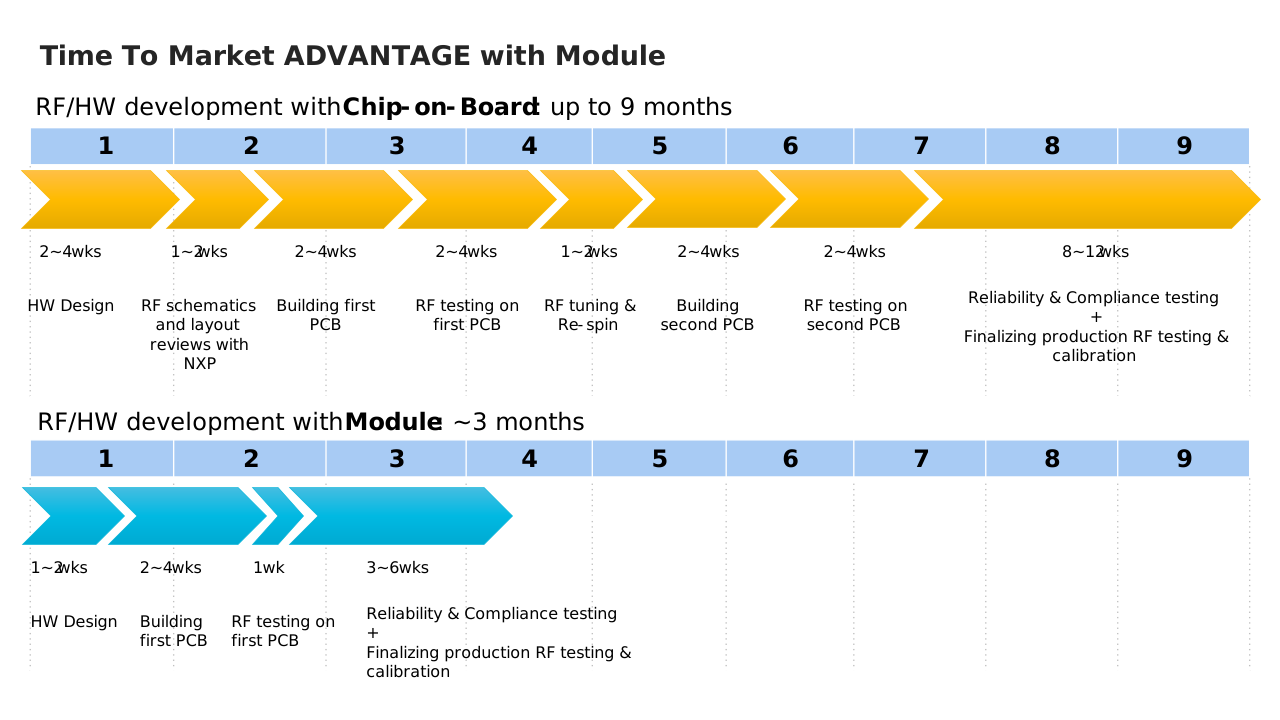
Caption: This timeline comparison illustrates the estimated time that it would take to implement Wi-Fi into a design with a module versus with a chip.
Design Simplification
How Wi-Fi modules simplify the development process is by offloading much of the complex parts of in RF design. Included in the module are the Wi-Fi chip from a supplier such as NXP, RF front-end, filters and often an antenna. This eliminates the need for circuit layout and reduces the risk of performance issues.
The chipset inside a module is tested both by NXP and the module partner, so by the time an end-customer receives a module, it has been tested twice, ensuring a very low risk of failures. Also, if the customer happens to receive a failed unit, it can easily be replaced, rather than replacing the entire mainboard due to a chip-on-board design.
As for NXP-based modules, the software development is streamlined by leveraging our already-existing enablement, including Wi-Fi drivers and software development kits.
Using a module for Wi-Fi design eliminates the need to dedicate resources of employing RF teams or investing in much of the necessary equipment. Additionally, integrating the module into the overall design takes less time than a chip-down approach. Wi-Fi design. This allows the designers to put more focus on the overall product versus the wireless connectivity aspect.
Certification
Most Wi-Fi modules are pre-tested and pre-certified. Certifying a Wi-Fi product is a multi-step process to ensure that a Wi-Fi-enabled device complies with regulatory and interoperability standards. Not only is this necessary to build a working Wi-Fi device, it is also mandatory for legal sale and operation, and these certifications vary by region.
As an added benefit, these modules already meet regulatory standards such as FCC (U.S.), CE and RED (Europe), ISED (Canada), MIC (Japan), and more. This means that companies can skip much of the expensive and time-consuming RF testing required when designing with Wi-Fi—leaving only the testing or pre-certified also reduces costs by cutting down on those certification requirements.
Even after a device is certified and is released to market, the certifications do not stop there. Certifications need to be maintained as requirements change. As new requirements are introduced, updates are made to the existing certifications. Module partners manage these certifications and keep up with changing standards, which provides value to customers who need to maintain regulatory compliance.
NXP Module Partner Solutions
NXP designs and manufactures a portfolio of Wi-Fi solutions that are supported by our module partners. These module manufacturers develop Wi-Fi modules that are based on the NXP SoCs to provide pre-certified solutions and accelerate the design cycle for customers who want to avoid the complexities of RF design. With module partners that simplify Wi-Fi integration, customers can focus on the core value of their products.
NXP’s broad ecosystem of partners provides many different options for depending on the needs of the end-device manufacturer. Each partner focuses on different strengths, whether it be size optimization, RF range and performance, pin-to-pin compatible product families, cost or more. The partnership with this diverse array of module designers allows NXP to expand the reach of our Wi-Fi portfolio and provide solutions to customers throughout the industrial, IoT and automotive markets.
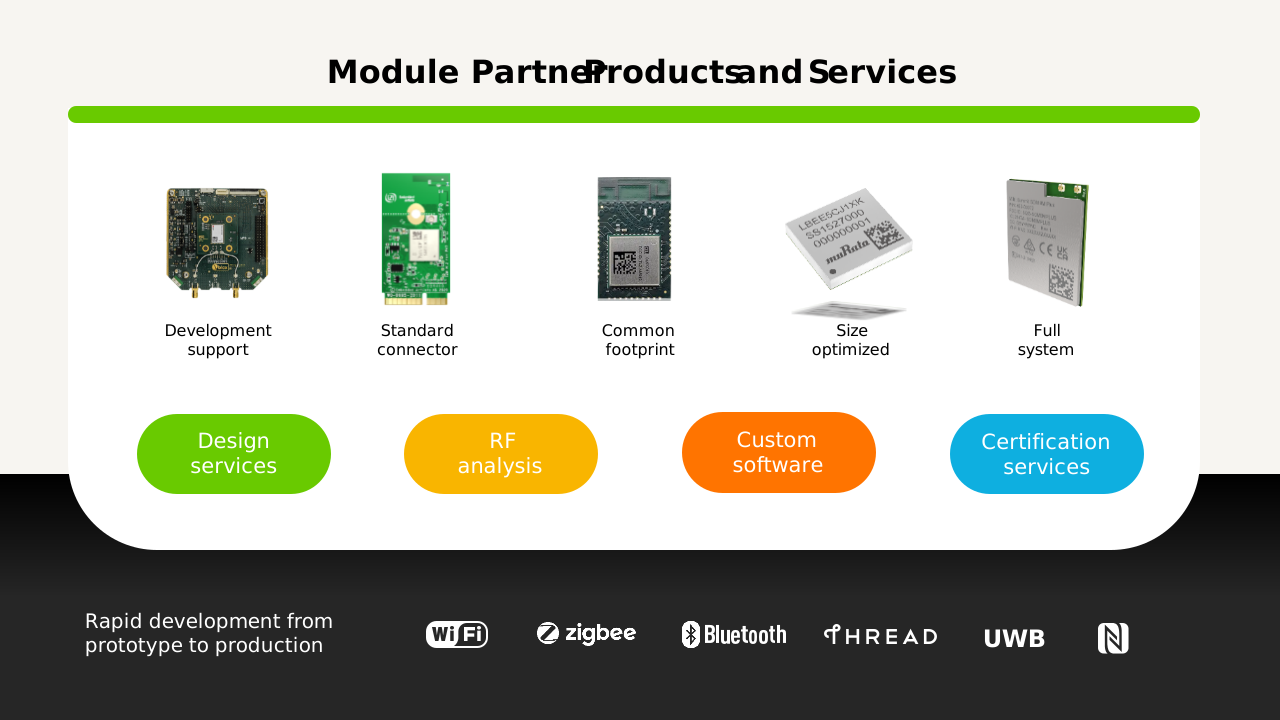
Caption: This infographic highlights the products and services that NXP’s module partners offer.
Get Reliable Connectivity with Less Complexity with NXP Partner Solutions
In today’s connected world, reliable Wi-Fi isn’t just a feature, it’s essential for functionality. Yet, ensuring reliability can be resource-intensive and technically demanding. Wi-Fi modules offer a more streamlined path forward, helping teams bypass the complexities of RF design, simplify certification and minimize time-to-market. By choosing pre-certified modules from NXP’s trusted partners, developers can ensure robust wireless performance while staying focused on what matters most: delivering innovative, high-quality products.