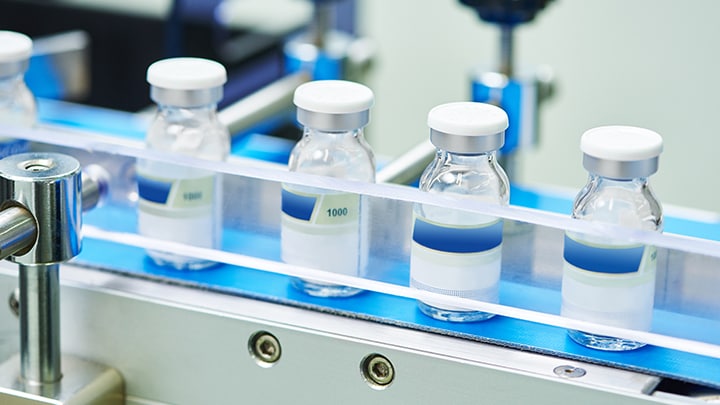
Healthcare is one of the most complex and dynamic systems on the planet. It comprises an intricate network of millions of moving medicines, containers, consumables and equipment. Patient safety can hinge upon the availability and authenticity of medicines and medical supplies. Which means that managing the supply, storage and use of every piece of this complex puzzle is an enormous responsibility. By giving every item a unique identity, NXP’s RFID and NFC technologies help healthcare providers boost patient safety and streamline operations.
RFID and NFC are contactless technologies at the heart of an industry transformation in healthcare. They are bringing efficiency improvements in supply chains, operations and processes, as well as better accuracy and integrity with item-level identification and tracking. RFID and NFC-enabled products are also helping drive positive environmental and social impact, making healthcare more resilient, responsible and accessible for all.
Advance contactless healthcare solutions. Visit our RFID and NFC to explore the full portfolio.
Keeping an accurate eye on lifesaving supplies
Hospitals, staff and supply partners face constant pressure to manage inventory accurately and safely at all levels. Hospital kits are usually hand-checked, item-by-item, then counted and stored by busy staff, with manual checks taking several minutes. If a single item in a kit is expired, missing, or unsterile, the entire kit may need to be reprocessed or replaced, leading to waste and delays.
But with RAIN RFID tags, entire kits are read in seconds, automatically verifying every syringe, vial and sponge. Bulk reading at speeds of 1,000+ items per second and 99.9% accuracy reduces the risk of human error, prevents waste, and ensures patients receive the right medication.
Enhance visibility across your pharmaceutical supply chain and inventory management with our high-performance UCODE products.
Supply chain transparency and authenticity
RFID- and NFC-enabled labels on blood bags, surgical sponges and pharmaceutical packs mean every item can be traced at every point from production to point of care. This reassuring level of visibility strengthens patient safety, with a unique identifiability that also supports faster recalls in the case of product defects, reducing risk and waste . Counterfeit and diverted products remain another major challenge . By combining RFID and NFC with digital twinning and online platforms, manufacturers can authenticate and track items along their journey from manufacture to dispense. Patients themselves can even take part in this safety loop, using a smartphone tap to verify medicines before use. Tamper-evident tags further protect contents, helping prevent unsafe or spoiled stock from being used.
Cutting paperwork and connecting care
RFID and NFC can also ease the day-to-day pressures facing clinical teams. For example, a study published in BMJ Journals revealed that nearly 70% of all intravenous medications administered had at least one clinical error, and a quarter of these were serious, with the potential to cause permanent harm to patients. In hospitals, cloud-connected infusion pumps combined with NFC-enabled medication labels can automatically record administration data. This can hold details down to drug and dosage level, including time stamps, sending it directly into a patient’s electronic medical record. This reduces paperwork, minimizes errors, and allows staff to spend more time on hands-on care.
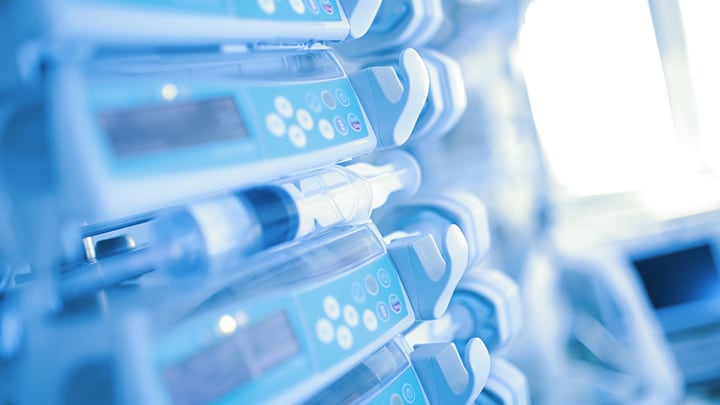
The same technologies support sustainable workflows in other ways, such as paperless prescriptions. In Austria, for example, patients use NFC health e-cards instead of paper prescriptions. Retail pharmacies scan the card for proof of identity and access online details of the prescription. A complete digital ‘paper trail’ is kept on the patient’s record, reducing the environmental footprint of physical paper. Importantly, this also gives physicians and pharmacists real-time accurate information about the patient’s treatments and needs.
Enable smarter patient care. Explore our NTAG and ICODE portfolios for tags and labels and discover how they support therapy adherence.
Supporting patients at home
With new injectable therapies on the rise, there is increasing demand for safe, reliable self-administration. NFC-enabled drug delivery devices help patients to follow their therapy regimes more easily. An increasing number of smart injectors and inhalers are now reusable, lowering the environmental impact of single-use plastics. Connectivity also enables data capture, reminding patients when to take medication, confirming dosage, and sharing adherence information with care teams. These features improve treatment outcomes while supporting sustainability goals.
Partnership driving changes
NXP collaborates with healthcare innovators across the ecosystem to bring these solutions to life. Bluesight’s Kit Check™ is deployed in more than 900 U.S. hospitals, automating kit management to reduce waste and prevent errors. Medication tracking with RAIN RFID is now transforming how pharmaceutical inventory is managed, traced and delivered globally.
The Axia Institute , of which NXP is a member, demonstrated the global potential of RAIN RFID technology for pharmaceutical traceability. This was done through a U.S. Drug Supply Chain Security Act (DSCSA) pilot that achieved 100% unit-level tracking and real-time error correction using a GS1-based model.
Pharma label manufacturers like Schreiner MediPharm and MM Pharma & Healthcare Packaging develop innovative RFID-NFC labels that protect pharmaceutical supply chains and fight counterfeits. Ypsomed’s SmartPilot™ re-usable add-on for autoinjectors uses NFC to check drug disposables’ identity and sensors to guide patients in self-administration, while offering a more sustainable delivery solution.
Innovative system solutions for better healthcare outcomes. Visit our Healthcare application page and see how NXP advances medical devices.
Closing the loop in healthcare
As healthcare supply chains grow in complexity, the value of visibility will only increase. RFID and NFC technologies help unify scattered data and information into a single, trustworthy picture, visualizing the entire supply chain. It shows exactly where vital resources are, how they are used, when they reach end-of-life and when low stock levels need replenishment. This transparency prevents waste and improves inventory control, as well as supporting the principles of a circular economy, where products and materials are kept in use for as long as possible. In this way, RFID and NFC technologies can keep patients safer and hospitals more efficient, and make healthcare more sustainable, resilient and future-ready.