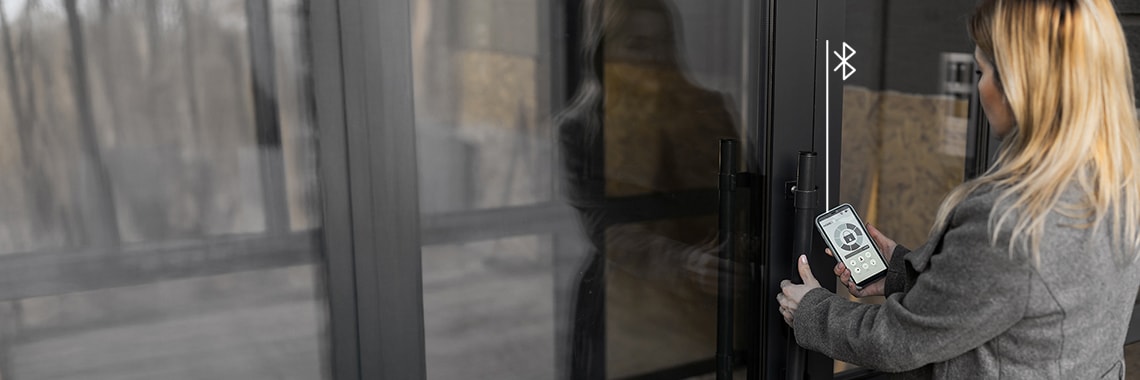
Accurate and secure distance measurements are crucial for industrial IoT
(IIoT) environments. Applications range from secure asset tracking and
automated warehouse systems to building automation and access control systems.
However, standard ranging methods struggle to deliver the accuracy and
security features modern IIoT applications demand.
NXP’s
MCX W72
wireless microcontroller unit (MCU) addresses these challenges with integrated
Bluetooth® Channel Sounding
and hardware support via
FRDM-MCXW72
and MCXW72-LOC development boards for rapid prototyping and deployment.
The Benefits of Bluetooth Channel Sounding Technology
For years, Bluetooth ranging relied on Received Signal Strength Indicator
(RSSI) and Angle of Arrival/Departure (AoA/AoD) techniques. While simple to
implement, these approaches suffer from limited accuracy and security
vulnerabilities. For example, RSSI measurements are easily affected by
environmental factors and multipath interference. Both methods are susceptible
to man-in-the-middle (MITM) attacks where attackers can manipulate signal
strength to spoof distance measurements.
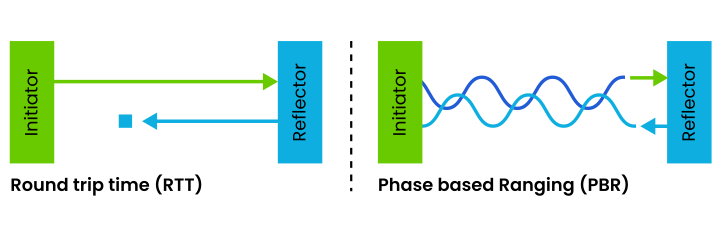 This illustrates how Bluetooth Channel Sounding combines round trip time and phase-based ranging measurements.
Bluetooth Channel Sounding—a part of the Bluetooth 6.0 specification—takes a
fundamentally different approach to distance measurement by combining two
complementary techniques: Round Trip Time (RTT) and Phase-Based Ranging (PBR).
RTT provides secure, coarse distance estimation via encrypted, time-stamped
packets that cannot be reproduced by attackers. PBR then delivers fine-grained
accuracy by measuring phase shifts in exchanged tones, achieving the typical
accuracy of ±0.5 meters in open-air environments.
Channel Sounding technology builds a solid defense against relay and
amplification attacks by using encrypted packets with timestamps and
cross-validating RTT and PBR measurements. This technology is well-suited for
applications requiring precise, accurate distance measurements that directly
impact security—for example, smart door locks, access control systems, keyless car
access, digital home access and building automation systems.
Design your IoT projects with an advanced Bluetooth Channel Sounding and Localization Compute Engine. Order a FRDM-MCXW72 development board for your next project.
NXP’s MCX W72: Channel Sounding for Industrial IoT Applications
The MCX W72 is NXP’s Bluetooth 6.0 Channel Sounding-certified wireless MCU
designed for industrial IoT applications. The platform supports multi-protocol
connectivity including Bluetooth Low Energy (LE), Matter with Thread and
Zigbee.
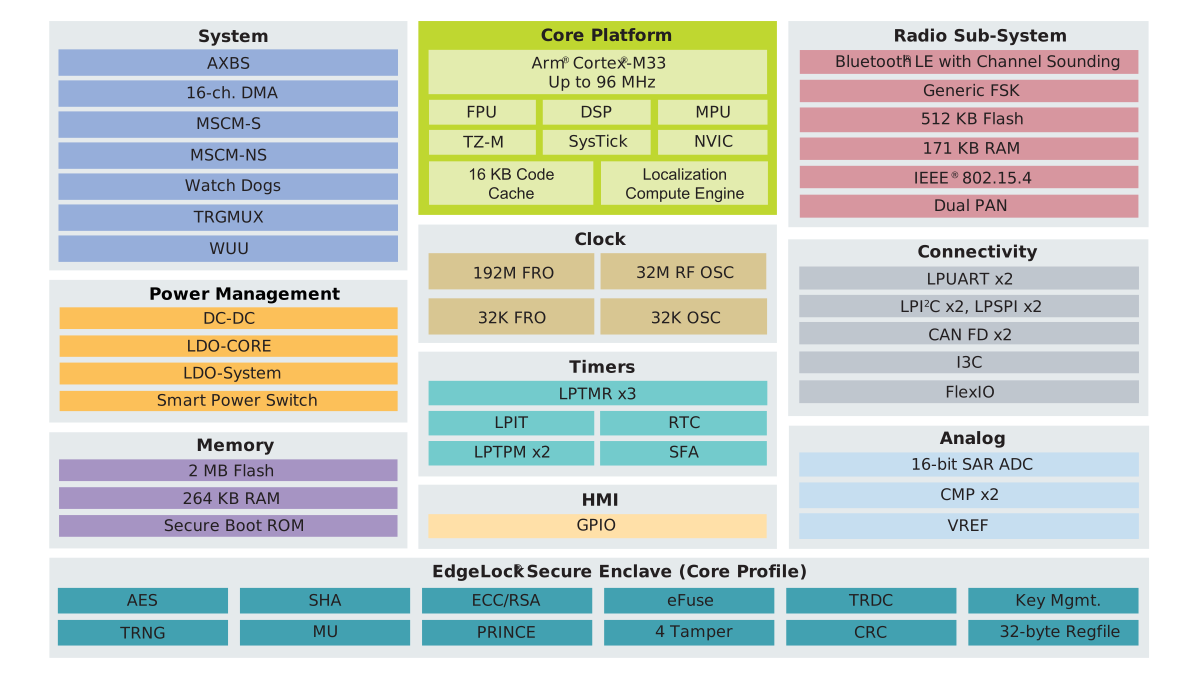 Block diagram of the MCX W72.
 For a better experience, download the
block diagram.
At the heart of the MCX W72’s ranging capabilities is a dedicated Localization
Compute Engine (LCE). This specialized hardware accelerates positioning
algorithms up to 10 times faster than the main Arm® Cortex®-M33 core, therefore
reducing algorithm execution time by nearly 45 %. The result is lower latency
and reduced power consumption, both crucial for battery-powered IIoT devices.
NXP’s MCX W72 handles security through its integrated EdgeLock® Secure Enclave
Core Profile, which isolates sensitive cryptographic operations including key
storage and trusted boot processes. Additionally, the advanced Bluetooth LE
radio supports up to 24 simultaneous connections, providing robust
connectivity for complex IIoT deployments where multiple devices need to
communicate and coordinate ranging operations.
Hardware Enablement: Development Boards for Rapid Prototyping
To help developers bring Bluetooth® Channel Sounding into real-world
applications, NXP provides dedicated hardware platforms for rapid
prototyping. These boards simplify evaluation, reduce time-to-market, and
offer flexible options for building secure, accurate ranging solutions.
FRDM-MCXW72 Development Platform
The FRDM-MCXW72 brings NXP’s proven FRDM platform approach to wireless
development. This cost-effective board comes preprogrammed with a wireless
demo that works immediately with the NXP IoT Toolbox mobile app, allowing
developers to evaluate basic functionality within minutes of unboxing. The
board offers multiple expansion options including Arduino headers, mikroBUS
and peripheral module (Pmod) connectors, which makes it easy to add sensors
and peripherals for application-specific prototyping. An on-board MCULink
debugger based on the LPC55S69 also eliminates the need for external debug
tools. Additional features include external flash memory, inter-integrated circuit (I²C) sensors, a light sensor, RGB and blue LEDs, controller area network (CAN) connectivity, a printed circuit board (PCB) antenna and a uFL connector for conductive (cable) measurements.
MCXW72-LOC Localization Board
For developers focused specifically on Channel Sounding applications, the
MCXW72-LOC offers a purpose-built evaluation platform. This IIoT evaluation
kit provides exhaustive testing capabilities for the MCX W72’s multiprotocol
wireless support, including Bluetooth LE, Zigbee, Thread, Matter and CAN
connectivity.
The MCXW72-LOC features a dual antenna diversity system where an RF switch
dynamically selects between two 2.4 GHz antennas, improving ranging accuracy
compared to the single antenna on the FRDM-MCXW72 board. SMA connectors can be
selected instead of antennas by re-soldering the capacitor. This enables
conductive (cable) measurement experiments.
The MCXW72-LOC board comes pre-programmed with a channel sounding demo.
Developers can pair two MCXW72-LOC boards to seamlessly demonstrate wireless
ranging sessions and evaluate performance in real-world conditions. The
platform also offers an advanced MCU-Link debug probe, power and low-power
options, dual CAN transceivers, buttons, switches, LEDs and a MikroE Click
connector for easy sensor integration.
Development Ecosystem Support
Both boards are fully compatible with NXP’s development ecosystem. The
MCUXpresso software development kit (SDK) provides drivers, examples and
comprehensive documentation. Additionally, the Application Code Hub (ACH)
offers expert-written code examples to accelerate development while the
Expansion Board Hub (EHB) connects developers with compatible add-on boards
from NXP and our ecosystem partners. NXP’s proprietary algorithms handle the
task of converting raw Channel Sounding measurements into accurate distance
estimations, abstracting the difficult math for application developers.
NXP’s KW47: Bringing Channel Sounding to Automotive Systems
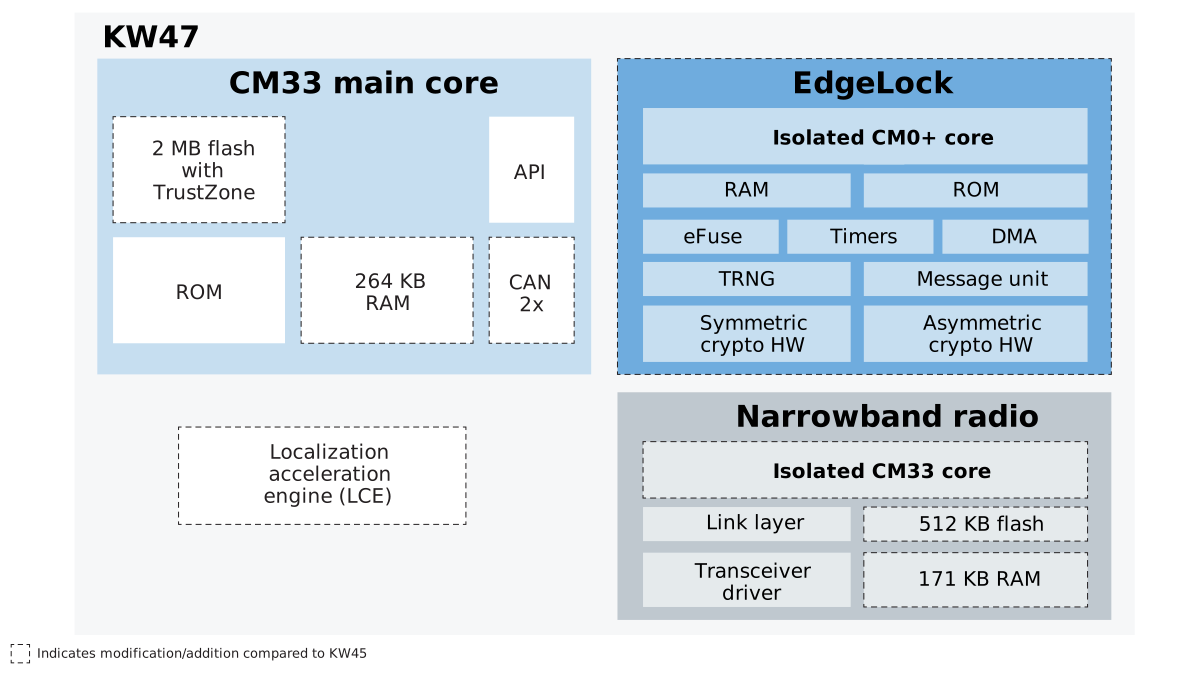 KW47 architecture.
 For a better experience, download the
block diagram.
While the MCX W72 targets IIoT, NXP’s KW47 brings the same Channel Sounding
capabilities to automotive applications. As NXP’s first automotive-grade
Bluetooth 6.0 Channel Sounding MCU, the KW47 meets the AEC-Q100 Grade 2
qualification and supports Automotive Software Process Improvement and
Capability Determination (ASPICE), Motor Industry Software Reliability
Association (MISRA) software standards and AUTOSAR with CAN communication.
NXP’s KW47 enables secure digital key systems and car access applications with
impressive range—offering the capability to detect drivers up to 100 meters
away with 20-50 cm accuracy at close range. The shared platform architecture
between KW47 and MCX W72—including the same LCE and EdgeLock security ensures a consistent development experience and interoperability across
automotive and IIoT applications. The KW47-LOC development board also provides automotive developers with evaluation tools similar to the MCXW72-LOC for IIoT applications.
Production-Ready Solutions Available
NXP’s MCX W72 and KW47 are in production. Development boards are available
now, allowing developers to start prototyping right away to prepare for
production launches.
Unlock the possibilities. Discover the FRDM-MCXW72.